
The Splendours of South India by Rail 2027
• Bengaluru • Hampi • Hassan • Belur / Halebeedu • Mysuru • Ooty •
• Mettupalayam• Coimbatore • Chennai • Mahabalipuram • Puducherry •
• Madurai • Kovalam • Alappuzha • Kerala Backwaters • Kochi •
Next
Departure
- Overview
- Highlights
- Map & Itinerary
- Trip Inclusions
- Transport & Accommodation
- Things you need to know
- Reviews
- FAQs
Welcome to an extraordinary fully-escorted 19-day rail adventure across the enchanting landscapes and timeless treasures of South India - a region where history unfolds in grand temples and ancient ruins, nature paints breathtaking vistas from misty hill stations to tranquil backwaters, and vibrant cultures blend seamlessly with warm, legendary hospitality. From Bengaluru (Bangalore) where heritage meets high tech, to the majestic UNESCO World Heritage ruins of Hampi, to the intricate Hoysala masterpieces in Hassan, Belur, and Halebeedu, to the royal opulence of Mysuru (Mysore) Palace, the serene French colonial elegance of Puducherry (Pondicherry), the quiet charm of the Kerala Backwaters and more, this tour is designed to delight. Travel is by train wherever it is available, including a special journey on the Ooty Toy Train on the famous Nilgiri Mountain Railway.
Departure dates
Per person twin share: $11,985
Single supplement: $3,545
Some highlights of your tour
- Ride the UNESCO listed Nilgiri Mountain Railway on the famous Ooty Toy Train
- Travel on India’s railway network – by far the most atmospheric way to explore the country
- Visit the incredibly preserved UNESCO World Heritage sites of Hampi and Belur & Halebeedu
- Explore the famous UNESCO World Heritage rock-cut monuments of Mahabalipuram
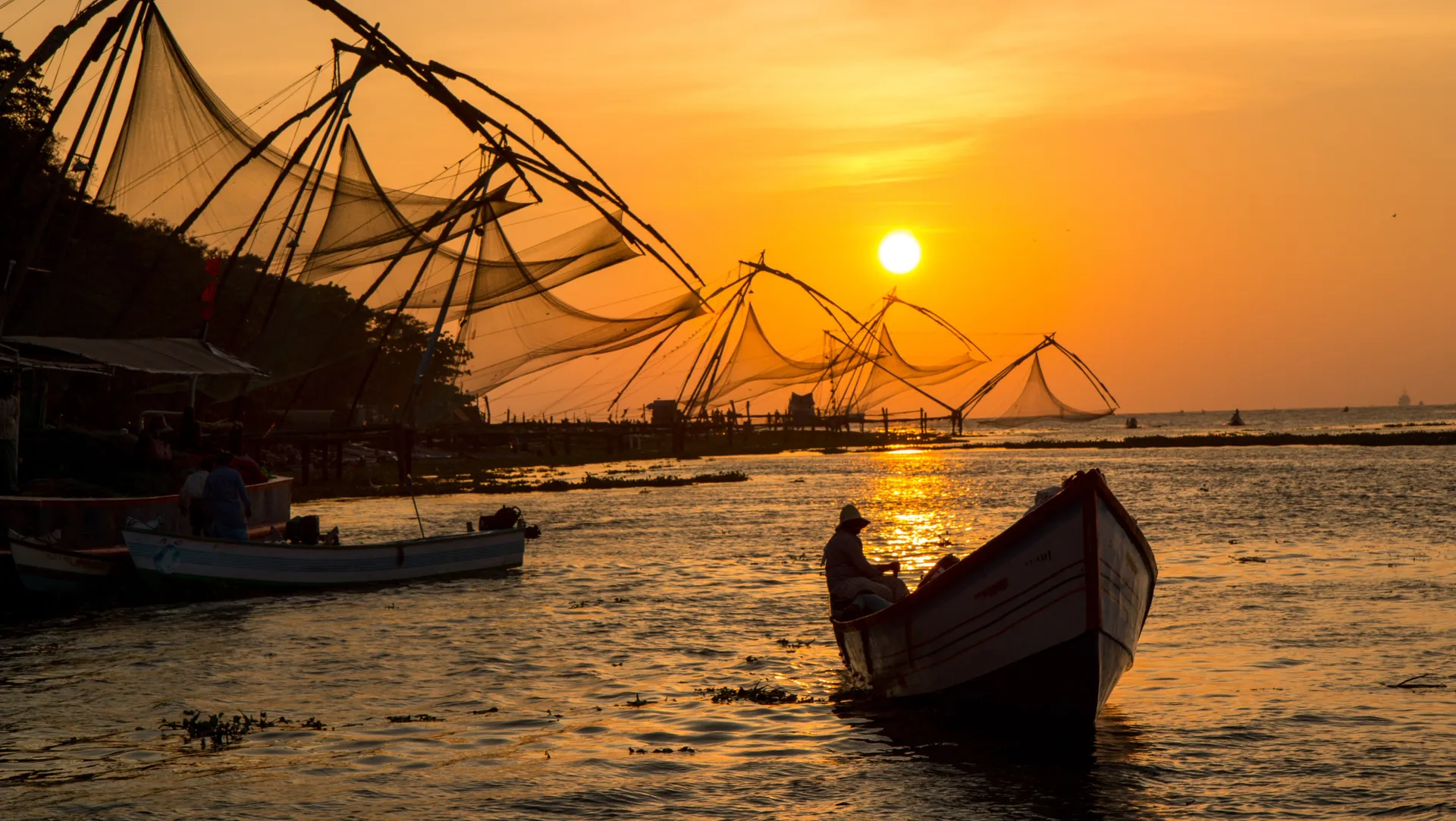
- See the unique cantilevered Chinese Fishing nets in Kochi, the only place they are used outside China
- Tour a Tea Estate in Ooty to see first hand the journey of this much loved leaf from the field to the table
- Enjoy a rickshaw tour of the French Quarter in Pondicherry with its delectable food and colonial architecture
- Tour Madurai’s Meenakshi Temple which is dedicated to Lord Shiva
- Enjoy cruising the romantic Kerala backwaters on a private houseboat in Alappuzha (Alleppey)
- Tour the spectacular Mysuru Palace
- Browse the Devaraja Market, one of the oldest and most famous markets in South India
- Relax in 5 -star sea side resorts in Pondicherry, Kovalam and Kochi
Namaste and Aapka swaagat hai – Hello and welcome to India!
Whether you arrive by plane or train, you’ll be met and privately transferred to our hotel. Check in is available from 2pm.
Your tour starts tonight at 6:30pm with welcome drinks in the hotel bar to get to know your tour leader and fellow travellers, followed by a welcome dinner including drinks at Karavalli, the hotel’s beautiful award winning, coastal South Indian restaurant set in a traditional Mangalorean-style bungalow.
Founded in the 16th century, Bengaluru, also known as “The Garden City” because of its tree-lined boulevards, serene lakes, and blooming gardens, is the dynamic capital of the state of Karnataka and the beating heart of southern India. Once a humble mud fort and then a quiet British cantonment, this city has transformed into India’s leading IT powerhouse
and a dazzling metropolis where heritage meets high-tech, buzzing with innovation, culture, and cosmopolitan charm.
If you’d like to arrive earlier in Bengaluru to explore the city prior to the tour starting, please reach out to our office on 1300 800 977 – we can arrange your pre-tour accommodation at our hotel at our negotiated group rate. Availability is on a request basis, so the sooner you make that decision the better.
Overnight: Vivanta Bengaluru, Bengaluru (D)
It’s a very early start today to be at the Bengaluru Railway Station to board our first railway journey of the tour – the Vande Bharat Express to Davangere. Settle in and enjoy your packed breakfast on board as the sun rises above the rolling fields, coconut groves, and distant hills of the region.
On arrival at Davangere just after 9am, we’ll transfer to our waiting private coach and continue to the “stell city” of Hospet, where we’ll pause for lunch at the Royal Orchid Hotel before continuing the short distance to the UNESCO World Heritage city of Hampi, our home for the next two nights.
Founded in 1336 AD and nestled along the Tungabhadra River, Hampi rises dramatically amidst colossal boulders and ancient ruins – each one echoing the grandeur of the Vijayanagara Empire. Once a city larger than Rome and richer than Lisbon, Hampi thrived as a global trading hub for diamonds, pearls, horses, and fine silks. Today, its temples, palaces, and market streets sprawl across 29 square kilometres, earning it the title of “The World’s Largest Open-Air Museum” and a proud place on the UNESCO World Heritage list.
Our hotel is the amazing award-winning Kamalapura Palace, where you’ll be transported back in time to the glorious days of the 14th-century Vijayanagara Empire with its stone-paved boulevards, arched hallways, regal chambers against a backdrop of stunning rugged forests and boulders. After our mid-afternoon check in, you’ll have the choice today of staying in the hotel to relax and explore, or joining an optional guided heritage walk through Anegundi village, on the northern side of the river and a part of the UNESCO World Heritage site that isn’t on tomorrow’s itinerary when we visit the main ruins.
Thought to pre-date Hampi by 5,000 years, Anegundi is steeped in legend as the mythical Kishkindha kingdom from the Ramayana, home to the monkey kings Vali and Sugriva. Historically, it served as an early capital before the Vijayanagara Empire shifted to Hampi in the 14th century. The village features remnants of forts, palaces, and temples from the Vijayanagara era, blending history with rural charm amid rice fields, banana plantations, and boulder landscapes.
We’ll regroup in the evening to enjoy dinner together in the hotel restaurant.
Overnight: Kamalapura Palace Hotel, Hampi (B,L,D)
This morning after breakfast, we’ll set out on our private coach to explore the magnificent ruins of Hampi, situated on the banks of the river and one of the most spectacular archaeological sites in India and a UNESCO World Heritage site since 1968. Once the magnificent capital of the Vijayanagara Empire (1336–1565 CE), it was one of the greatest Hindu empires in medieval India and reportedly the second-largest city in the world, after Beijing, in the early 16th century.
Highlights here include the grand Vittala Temple Complex, considered the most impressive structure in Hampi and famous for its stone pillars that produce musical notes when tapped and a stunning stone chariot with rotating wheels, showcasing the exceptional craftsmanship of the Vijayanagara artisans; the King’s Balance, a rare and ancient weighing scale from the 15th century used to weigh kings against gold, silver, and precious stones, which were then distributed to the poor; and the sacred Virupaksha Temple, one of Hampi’s oldest and most revered religious sites and the only major temple that has survived destruction – be welcomed by Lakshmi the temple elephant before passing under the dominating 50-metre-high gopuram (gateway tower) adorned with intricate carvings of Hindu deities and mythological scenes.
During our exploration of this magnificent site, we’ll also visit the lively Hampi Bazaar, a kilometre-long street that was once a bustling market and residential area for nobles – while the eastern end retains its historic charm, the western end has been transformed into shops, restaurants, and local stores. You’ll have time at leisure here to enjoy some lunch, admire the colossal 6.7-metre statue of Ugra Narasimha, and poke into some shops before returning to the hotel in the mid afternoon.
After a few hours to relax, we’ll regroup in the hotel restaurant for dinner.
Overnight: Kamalapura Palace Hotel, Hampi (B,D)
This morning after breakfast and check out, we’ll board our private coach and drive across the Deccan Plateau to Hubballi, soaking up rural scenes of coconut groves, green fields, rocky boulder outcrops and small village life along the way.
Upon arrival in Hubballi, we’ll enjoy lunch at a local restaurant before transferring to the railway station to board the Janshatabdi Express for a scenic afternoon rail journey across Karnataka’s countryside to Arsikere, where we’ll transfer to our private coach for the remainder of our journey today to Hassan, a tranquil town surrounded by lush fields and ancient temples.
This historic city, known today for its lush landscapes, coffee plantations, and agricultural produce like areca nuts, potatoes, and spices, was a vital centre of Hoysala Dynasty power and culture from the 11th to the 14th century. Named after the deity Goddess Hasanamba, whose temple in the city is a major pilgrimage site and only opens once a year, Hassan beautifully blends devotion, royal heritage, nature and timeless artistry.
Upon arrival in the evening, we’ll check into our hotel and enjoy dinner together in the hotel restaurant.
Overnight: Hoysala Village Resort, Hassan (B,L,D)
This morning after breakfast, we’ll embark on an excursion to the UNESCO World Heritage listed twin temple towns of Belur and Halebeedu – two of the most iconic and exquisite examples of Hoysala architecture from the 12th-13th centuries, and home to some of India’s most intricately carved temples.
In Belur, a highlight is the Chennakeshava Temple, a monumental structure and still-active temple that took 103 years to complete. It is a single-shrine (ekakuta) structure on a star-shaped platform, famous for its ornate doorways, bracket figures (madanakai or shilabalikas depicting graceful women in dance poses), and wall friezes narrating epics like the Ramayana and Mahabharata.
Just 16 kilometres away lies Halebeedu, the former capital of the Hoysalas, before being ravaged by the Delhi Sultanate in the 14th century. The highlight here is the grand, lakeside twin-shrine Hoysaleswara Temple, built around 1121 CE and dedicated to Shiva. It’s considered the most elaborate Hoysala monument, with endless bands of sculpture on its exterior walls depicting gods, mythical beasts, dancers, elephants, horses, and scenes from Hindu epics, daily life, and mythology. Look out for the two massive Nandi bull monoliths at the entrance.
We’ll return to our hotel in time for lunch, after which the rest of the day and evening is yours at leisure.
Overnight: Hoysala Village Resort, Hassan (B,L)
This morning after breakfast and check-out we’ll journey south to Mysuru (formerly known as Mysore), one of the most beautiful and culturally rich cities in South India – a city steeped in royal splendour and colonial grace that still feels like it belongs to a gracious, slower-paced era while being very much part of 21st-century India. The magnificent Mysuru Palace (Amba Vilas Palace) is the city’s most significant cultural attraction and one of the most visited monuments in India after the Taj Mahal, and it’s here that we’ll visit after checking in to our hotel and enjoying lunch.
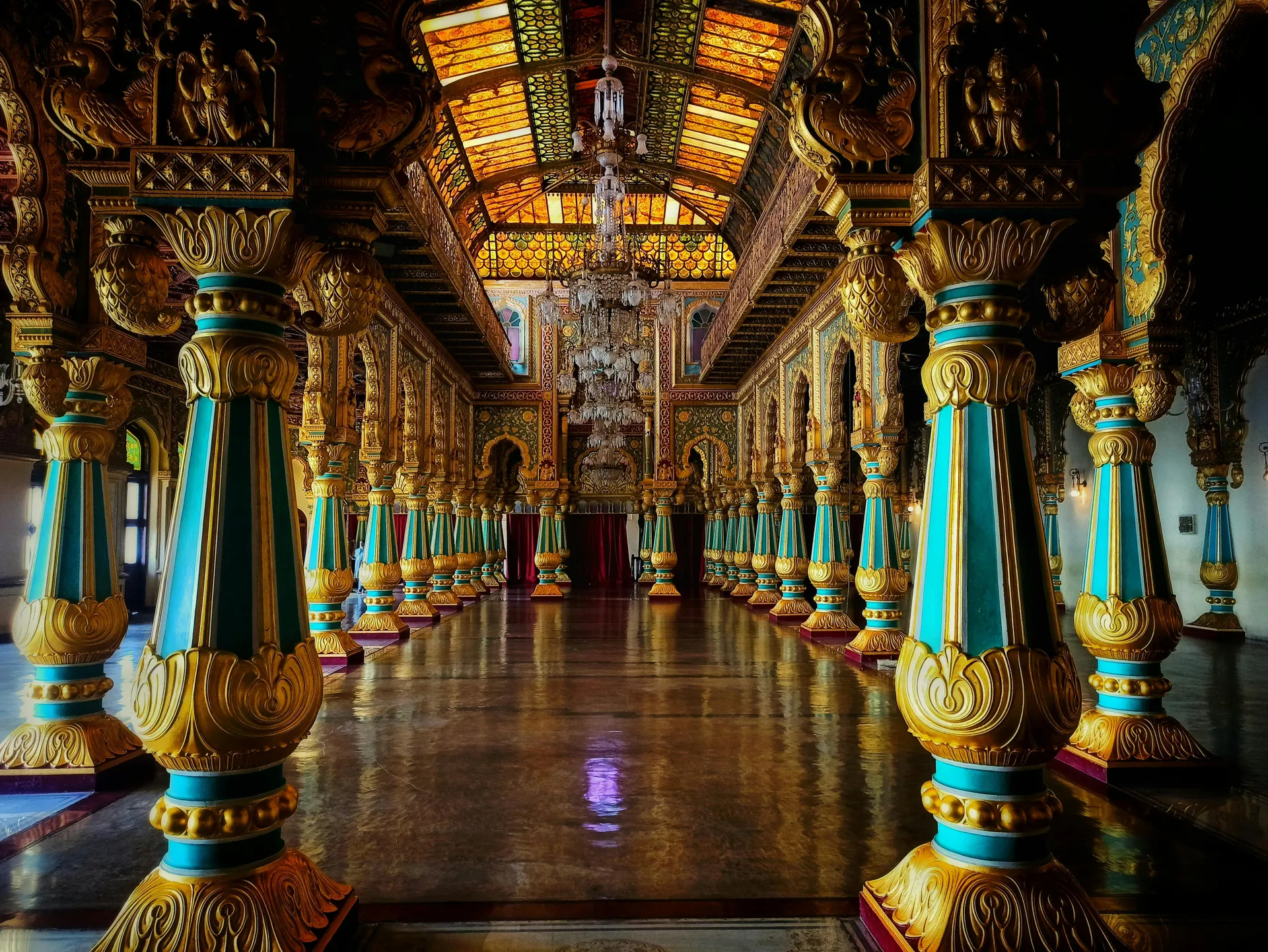
Also known as the Maharaja’s Palace, the resplendent Mysuru Palace you see today is actually the third palace built on the same site. The earlier two, both wooden structures, were destroyed by fire in 1638 and 1897 respectively. The current palace, commissioned by the Wadiyar royal family in 1897 and completed in 1912, was constructed with grey granite, pink marble domes, deep-red/pink marble floors from Rajasthan, stained glass from Glasgow, cast-iron pillars from England, teak wood from Burma, and chandeliers from Czechoslovakia and Belgium. Explore the massive Public Durbar Hall with ornate cast-iron pillars and stained-glass peacock ceiling; marvel at the extremely opulent gold-plated arches, ivory-inlaid doors, Belgian crystal chandeliers, and intricate frescoes of the Private Durbar Hall; and be left breathless by the Royal Wedding Hall with its stunning stained-glass dome and cast iron pillars painted in vibrant colours.
Later, we’ll explore the Mysuru Railway Museum, a delightful tribute to India’s rail history, set in a charming open-air campus. The museum showcases a fascinating collection of vintage locomotives, royal coaches, and railway memorabilia from the British Raj era. Originally housed within the Mysuru Palace, the exhibits include a royal train compartment once used by the Maharaja, along with rare photographs, model galleries, and vintage signalling equipment.
Back at our hotel, there’ll be time to relax and freshen up before dinner together.
Overnight: Radisson Blu Mysuru (B,L,D)
This morning after breakfast and check-out, we’ll load our luggage onto our private coach and set off for a visit to Mysuru’s vibrant Devaraja Market – a bustling bazaar that has been deeply woven into the heritage and daily rhythm of Mysuru for over one hundred years, and a true reflection of traditional Indian marketplaces. As you wander its lively lanes, you’ll be surrounded by fresh flowers, aromatic spices, sandalwood, silks, and smiling vendors, with each stall telling its own story of local life and culture.
Back in our coach, we’ll continue our journey to Ooty in the Nilgiri Hills, pausing to enjoy lunch at leisure in Bandipur, once the private hunting grounds of the Maharajas. After lunch, we’ll ascend the winding hill road to Ooty, officially known as Udhagamandalam, and referred to as the “Queen of Hill Stations” – a colonial hill station situated at an elevation of about 2,240 metres featuring rolling tea plantations, misty landscapes, eucalyptus forests, and a pleasant climate. British colonial officer John Sullivan “discovered” the area in the early 19th century, establishing it as a summer retreat for the British Raj to escape the plains’ heat, building the artificial Ooty Lake in 1824 and the first bungalow (Stone House). The town grew rapidly with tea estates, colonial architecture, and the UNESCO listed Nilgiri Mountain Railway, completed in 1908. Originally inhabited by the indigenous Toda tribe, who revered a sacred stone (giving rise to the name from local words meaning “single stone” village), it retains some tribal heritage alongside colonial influences.
Upon arrival, we’ll go directly to our hotel and check in to our heritage hotel, a crown jewel of Ooty’s hospitality scene, and be transported back to a bygone era while enjoying modern comfort. After some time to relax and explore the hotel’s wonderful grounds, dinner tonight will be in the hotel restaurant.
Overnight: Taj Savoy, Ooty (B,D)
This morning after breakfast, we’ll take a stroll through Ooty’s famed Botanical Gardens, one of India’s oldest and most beautiful botanical gardens, spread across 55 acres on the slopes of Doddabetta Peak at an elevation of about 2,200–2,500 metres. Established in 1848 by the Marquis of Tweeddale, the gardens were designed by architect William Graham McIvor in the Italian style, with terraced layouts that follow the natural contours of the hills. Originally created to cultivate plants for colonial use and acclimatize exotic species, they now house over 650 species of plants, including rare trees, ferns, and flowers. One of the highlights here is the Fossil Tree Trunk, a 20-million-year-old petrified tree from the Tertiary period.
From here, we’ll visit the Tea Factory and Museum to learn about the region’s signature brew and learn about the Nilgiri tea making process, from plucking fresh leaves to withering, rolling, fermenting, drying, and packaging guided by knowledgeable staff. Tea cultivation in the Nilgiris began in the British colonial era, with experimental plantations starting in the 1830s. The region became a major producer, transforming the landscape and economy. This particular factory, established around 2005, is one of the highest-elevation tea factories in South India and combines a working production unit with educational displays on tea’s global origins (from ancient China), its arrival in India, and its evolution in the Nilgiris. The museum section features exhibits on the history of tea in India, its origins in the Nilgiris since 1835, and vintage equipment. There’ll be time to enjoy free samples of hot tea (flavors like cardamom, masala, ginger, or green) and browse in the shop for all things tea-related.
The rest of the afternoon and evening is at leisure.
Overnight: Taj Savoy, Ooty (B)
It’s a lazy morning today – enjoy a leisurely breakfast and free morning before checking-out and gathering for lunch together at our hotel.
After lunch, we’ll transfer to Ooty railway station to board the beloved Nilgiris (Ooty) Toy Train for the journey on the UNESCO World Heritage Nilgiri Mountain Railway, operational since 1899 and renowned as one of the world’s most scenic train journeys, winding through lush tea estates, dense forests, misty valleys, waterfalls, 16 tunnels, and over 250 bridges and viaducts to Mettupalayam.
Our coach will meet us and safely take us on to Coimbatore, arriving in the early evening.
Coimbatore, lovingly known as Kovai, is a bustling city nestled along the banks of the Noyyal River and embraced by the majestic Western Ghats. Once home to the Irular tribes and later flourishing under the Chola dynasty before the British era, Coimbatore beautifully blends heritage, industry, and innovation. Today, it stands as a vibrant hub of culture, commerce, and craftsmanship, where ancient temples meet modern skylines.
After checking into our centrally located accommodation, recognised as one of the finest in the city, we’ll enjoy dinner together at the hotel.
Overnight: Vivanta Coimbatore (B,L,D)
It’s an early start today. After checking out and collecting our packed breakfast boxes, we’ll transfer to Coimbatore railway station and board the Vande Bharat Express, India’s semi-high-speed, self-propelled train for a comfortable journey to Chennai.
After lunch on arrival at a local restaurant, we’ll set out in our private coach and explore Fort St. George, a historic fortress completed by the British East India Company in 1644 widely regarded as the first British fortress in India, and the birthplace of the modern city of Chennai. The fort played a key role in establishing British influence in South India, withstanding sieges from French forces, local rulers and others during the 18th century. It served as the headquarters of the Madras Presidency and was central to colonial administration. Today, Fort St. George houses the Tamil Nadu Legislative Assembly and Secretariat, making parts of it restricted. However, key historical areas like the museum and church are open to the public and we’ll certainly be exploring them.
We’ll continue our journey to today’s final destination with a drive along the palm-lined Marina Beach, one of the world’s longest urban beaches, stopping to explore Dakshin Chitra, a cultural village that brings South India’s traditional arts, architecture, and lifestyles to life with its 18 heritage houses, recreated streetscapes, contextual exhibitions and interactions with village artisans.
We’ll arrive in the coastal town of Mahabalipuram, our home for the next two nights, in the late afternoon and go directly to our hotel to check in. Set against a boulder-strewn landscape along the Bay of Bengal, Mahabalipuram is an open-air gallery of ancient rock-cut marvels – the stunning 7th- and 8th-century rock-cut monuments built by the Pallava dynasty, collectively designated as the “Group of Monuments at Mahabalipuram”, a UNESCO World Heritage Site since 1984. What is really special about the carvings on these monuments is that they capture everyday life – scenes of play, work, and celebration offering a rare and human touch – rather than the tradition of depicting gods and goddesses.
Our resort hotel overlooks the tranquil Bay of Bengal and is located just steps from the historic Shore Temple. After some time to freshen up, we’ll gather for a seafood dinner together by the sea.
Overnight: Radisson Blu Resort Temple Bay, Mahabalipuram (B,L,D)
After breakfast this morning, we’ll set out on a half-day guided excursion to discover the famous rock-cut monuments of this historic city. Originally a thriving port city during the 3rd–9th centuries CE, Mahabalipuram served as a key hub for trade with Southeast Asia and Sri Lanka. The monuments showcase early Dravidian architecture, with intricate rock-cut caves, monolithic rathas (chariot-shaped temples), bas-reliefs, and structural temples carved from granite. The site exemplifies Pallava craftsmanship, influencing art in regions like Cambodia and Java.
We’ll start at Arjuan’s Penance, a massive open-air rock bas-relief measuring 31 metres long and 9 metres high, depicting scenes from the Mahabharata, including Arjuna’s austerity or the descent of the river Ganges – considered one of the world’s largest and finest. Moving on, we’ll stand in awe at the “Five Rathas” – five monolithic rock-cut temples shaped like processional chariots and masterpieces of 7th century monolithic architecture; the Mandapams – rock-cut halls with intricate carvings, including a pastoral scene of Krishna lifting the Govardhana Mountain; and Krishna’s Butterball, gigantic 250-ton natural granite boulder precariously balanced on a slope, defying gravity for over 1,300 years – a fun and mysterious sight.
We’ll end our morning at the iconic Shore Temple near our hotel – a structural granite masterpiece of Pallava artistry overlooking the Bay of Bengal. Dedicated to Shiva and Vishnu, this temple is one of the oldest in South India and is believed to be the only surviving one of what legend says were seven temples.
Back at the hotel, the afternoon and evening is yours to enjoy lunch and dinner at leisure, have a swim, shop for handicrafts, or just lie back and relax.
Overnight: Radisson Blu Resort Temple Bay, Mahabalipuram (B)
This morning after breakfast and checking out we’ll board our private coach for the journey to Pondicherry, stopping at the unique, futuristic and fascinating experimental universal township of Auroville along the way. Described as “the City of Tomorrow”and founded in 1968, Auroville was envisioned as a Universal Town, where people from different nationalities, faiths and beliefs could live in peace and harmony – it’s a township devoted to an experiment in human unity endorsed by UNESCO and the Indian government, with the goal of realising human unity in diversity. Planned for up to 50,000 residents in a “Galaxy” layout with zones for residential, industrial, cultural, and international areas, surrounded by a green belt, it’s currently home to about 3,500 people from over 60 countries. You’ll have a chance to wander through its gardens, serene meditation spaces, and innovative architectural wonders, and feel the spirit of a city that looks beyond borders, beyond religion, and beyond time.
Continue to Pondicherry, where French charm meets Tamil warmth. Perched along the Coromandel Coast, “Pondy” was established as a French trading outpost in 1674, remaining under French rule for over three centuries, leaving behind a unique blend of Indian and European heritage. The city retains strong French influences in its architecture, street names, cuisine, and even police uniforms. Divided into the French Quarter (White Town) with tree-lined boulevards and colonial villas, and the Tamil Quarter with bustling markets and temples, it reflects a unique dual heritage and is famous for its laid-back atmosphere, affordable French-inspired cafes serving croissants and coffee, and thriving arts scene.
Upon arrival, we’ll enjoy lunch at one of the city’s famed hotels before transferring to our resort hotel, nestled at the estuary where the Chunnambar River meets the Bay of Benga, for check-in and a leisurely few hours to soak in the relaxed coastal atmosphere before regrouping for dinner.
Overnight: Le Pondy Resort, Pondicherry (B,L,D)
This morning after breakfast, we’ll explore Pondicherry’s graceful French Quarter on a rickshaw tour – a two-hour heritage experience, offering a glimpse into the city’s colonial past, with visits to local temples, the serene Sri Aurobindo Ashram, and elegant European-style mansions featuring colonnaded balconies. You’ll also pass by richly adorned Catholic churches and iconic landmarks such as the Ganesha Temple, Ayi Mandapam (a rare monument dedicated to a courtesan), the French War Memorial, the Gandhi Statue, and the historic Old Lighthouse. Keep an eye out for local policemen dressed in crisp white uniforms and French-style gendarme caps, adding to the town’s unique character.
We’ll return to the hotel to check-out and have some lunch before transferring to Villupuram railway station to board the semi-high-speed, fully air-conditioned TEN Vande Bharat Express for the journey south to Madurai, with rural landscapes, fields, and small towns outside your window. Dinner tonight will be on the train.
On arrival in the evening, we’ll transfer directly to the hotel and check in.
Overnight: GRT Grand, Madurai (B,L,D)
Madurai, the cultural capital of Tamil Nadu and often variously referred to as the “Athens of the East” and the “City of Jasmine”, is one of the oldest continuously inhabited cities in the world, with a history spanning over 2,500 years mentioned in classical texts and visited by Greek and Roman travellers like Megasthenes. Legend says the city was founded when divine nectar (madhu) fell from Lord Shiva’s locks, giving it the name “Madhurapuri” (city of nectar). The city played a significant role in India’s freedom movement, inspiring Mahatma Gandhi.
The heartbeat of Madurai is the Meenakshi Sundareswarar Temple, a massive Dravidian architectural marvel dedicated to Goddess Meenakshi and Lord Sundareswarar (Shiva), located in Madurai’s Old City. It is here that we’ll visit after breakfast this morning. Spanning approximately 15 acres, it features 14 towering gopurams adorned with thousands of colorful sculptures; the famous intricately carved musical pillars of the Thousand Pillar Hall; (actually 985), and the Golden Lotus Tank, where the ancient Tamil Sangam convened.
Upon exiting the temple gate, we’ll continue on a guided walking exploration through Madurai’s Old City of labyrinthine streets, alive with the hum of temple bells, spice shops, and tailors. Witness bustling daytime scenes – vendors haggling over fresh vegetables, herbs, and an array of fruits including numerous varieties of bananas; tea stalls alive with locals sipping chai amid the aroma of street snacks; coconut sellers slicing tender fruits for refreshing drinks; all accompanied by the waft of sandalwood from nearby artisans. Lunch is at leisure today, so you may want to enjoy something at the market.
We’ll return to the hotel for a couple of hours of downtime before an optional visit to the city’s flower market, one of the largest and most vibrant wholesale flower markets in the region, and world famous for the iconic Madurai Malli (jasmine sambac), a variety of jasmine renowned for its intense, long-lasting scent, exported to luxury perfume houses in France, including Dior and Chanel. The market handles massive volumes of flowers – typically 5-10 tonnes of jasmine alone per day. It’s a sensory overload you’ll remember forever – piles of colorful blooms, the overpowering sweet fragrance, bustling vendors stringing garlands, haggling buyers, and trucks unloading fresh harvests from nearby farms and villages.
Back at the hotel, there’ll again be some time to relax before we gather together for dinner.
Overnight: GRT Grand, Madurai (B,D)
This morning after breakfast and check-out we’ll transfer back to Madurai railway station and board the Vande Bharat Express to Nagercoil, enjoying a boxed lunch on board. Upon arrival, we’ll board our private coach for a visit to the magnificent 16th-century Padmanabhapuram Palace, a stunning 16th-18th century wooden palace complex considered one of the finest examples of traditional Kerala architecture in India. It served as the seat of the rulers of the erstwhile kingdom of Travancore and is often hailed as Asia’s largest surviving wooden palace. Constructed primarily from teak and other woods, the palace follows ancient principles of Taccusastra (Kerala’s science of carpentry), emphasizing sustainability, proportion, and climate-appropriate design like sloping roofs for rain, open courtyards for ventilation, and intricate joinery without nails. Every hall, corridor, and balcony tells a story of royal elegance, artistic mastery, and cultural heritage.
From here, we’ll continue by coach to the tranquil beachside haven of Kovalam, a renowned beach town often called the “Paradise of the South”, featuring a stunning crescent-shaped coastline along the Arabian Sea, fringed by swaying coconut palms and rocky promontories. Once a quiet fishing village, the tourism potential was first identified in the 1930s, encouraging the Maharani of Travancore to build resorts, culminating in some of the best in India. Our hotel, perched majestically on a cliffside overlooking the Arabian Sea, is the only cliff-top 5-star resort in India – a timeless retreat spread across 67 acres, including the historic Halcyon Castle, once the royal summer residence of Travancore’s kings.
After checking in, we’ll enjoy dinner together in the hotel restaurant.
Overnight: The Leela, Kovalam (B,L,D)
Enjoy a leisurely morning soaking up the atmosphere of our magnificent hotel before checking out and enjoying a leisurely lunch at the hotel ahead of our transfer to Trivandrum railway station to travel north aboard the Vande Bharat Express to Alappuzha.
Alappuzha (also known as Alleppey), Kerala’s oldest planned town and often dubbed the “Venice of the East”, is renowned for its intricate network of backwaters, lagoons, coconut groves, and meandering canals creating a landscape of unparalleled serenity.
On arrival, we’ll transfer directly to our lakeside hotel, check in and enjoy dinner.
Overnight: Uday Backwater Resort, Alappuhza (B,L,D)
After a relaxed morning at our hotel, we’ll check-out and transfer to the backwater to board traditional kettuvallam houseboats for an overnight exploration of Kerala’s enchanting backwaters. Stretching over 900 kilometres, Kerala’s backwaters are a mesmerizing network of lakes, lagoons, and canals, sculpted by the gentle rhythm of the sea over centuries. These waterways have long been vital transport routes, carrying cargo, spices, and people to the remotest corners of the region, and have played a crucial role in Kerala’s historical economy and cultural exchange.
You’ll glide through palm-shaded canals and across tranquil lagoons watching life unfold along the water’s edge – fishermen casting nets, children waving from the banks, and women washing clothes by hand, enjoying lunch and on board refreshments before pulling up for the night to be moored under a starlit sky for dinner and sleep.
Overnight: Xandari Riverscapes Houseboat, Backwaters (B,L,D)
We’ll bid farewell to our boat and crew after breakfast this morning and enjoy a scenic drive in our private coach to Fort Kochi (also known as Cochin), a historic port city blending Portuguese, Dutch, and British influences. Fondly known as the “Queen of the Arabian Sea, the city is set across a cluster of islands and a peninsula. Kochi’s strategic location has made it a vibrant, international trading hub for over 600 years – the Portuguese established the first European settlement here in the early 16th century, followed by Dutch and British rule. Over time, Arabic, Chinese, Portuguese, Dutch, and British influences have shaped its unique culture.
After checking-in to our hotel we’ll embark on an exploration of this fascinating city, starting with a visit to one of the most iconic symbols of Kochi – the Chinese Fishing Nets (Cheena Vala), massive cantilevered shore-operated lift nets introduced between the 14th and 15th centuries by traders from the court of Chinese emperor Kublai Khan. Lining the coast and creating a picturesque silhouette against the Arabian Sea, local fishermen still use them to earn their livelihood.
We’ll also visit the 16th-century St. Francis Church, the oldest European church in India and a monument steeped in maritime history. Built originally in 1503 by Portuguese Franciscan friars who arrived with Pedro Álvares Cabral, it stands as an enduring symbol of Europe’s early colonial presence on the subcontinent, and is significant as the original burial site of Vasco da Gama, the legendary explorer who died here during his third voyage to Kerala. Although his remains were later repatriated to Portugal, his tomb inside the church remains marked, a solemn reminder of the era when explorers connected continents and cultures through courage and discovery.
After enjoying lunch at a local restaurant, we’ll return to our hotel for some time at leisure. Or, you might like to stay in town and continue exploring its history at your own pace.
Later this afternoon, we’ll enjoy a spectacular Kathakali dance drama – Kerala’s signature art form, followed by a memorable farewell dinner including drinks at the hotel, overlooking the harbour.
Overnight: Taj Malabar Resort & Spa, Kochi (B,L,D)
Your tour ends after breakfast this morning. Check out is 12 noon. Transfers to the airport or train station will be scheduled to align with your travel time.
If you’d like to stay in Kochi a little longer, please reach out to our office on 1300 800 977 – we can arrange your post-tour accommodation at our hotel at our negotiated group rate. Availability is on a request basis, so the sooner you make that decision the better.
(B)
What's included
-
18 nights of accommodation in 4 and 5 star hotels
-
18 breakfasts, 12 lunches, 15 dinners
-
Complimentary drinks with welcome and farewell dinners
-
All transport fares and costs provided for in the itinerary
-
All meals, drinks excursions provided for in the itinerary
-
Porterage at hotels and railway stations
-
Airport transfers on arrival and departure
-
Full-time Railway Adventures Tour Leader and Local Tour Manager/Guide throughout
-
Additional local knowledgeable guides
-
Tipping and gratuities (valued at $500pp)
-
Accommodation taxes (if applicable)
What's not included
-
Travel to tour departure point and from tour end point
-
Travel insurance (Mandatory for international travel)
-
Visa fees
-
Meals and drinks not provided for in the itinerary
-
Things of a personal nature such as phone calls, laundry, room service, etc
Some ways you’ll travel
The best train trips possible, private luxury coach for off-train travel, guided walking where suitable, and other appropriate and appealing options to make exploration easy
Houseboat
South India
Vande Bharat Express
South India
Nilgiri Mountain Railway
South IndiaSome places you’ll stay
Hand-picked hotels and resorts based on location, customer feedback, value and atmosphere. Please Note: Hotels of a similar standard may be substituted.
The Leela
Kamalapura Palace Hotel
Taj Malabar Resort & Spa
Things you need to know
- All travellers require a Visa to enter India – you can easily apply online for the e-Tourist Visa at https://indianvisaonline.gov.in
- All travellers must also complete the free e-Arrival Card within 72 hours (3 days) before arriving in India
- Comfortable walking shoes are a must!
- The guided heritage walk in Anegundi during our stop in Hampi is around 3 kilometres across a 2.5 hour period
- The walking at UNESCO sites is often on uneven ground
- All bedrooms on the houseboat accommodation in Kerala are air conditioned with ensuite bathrooms
Our track record
Hear from some of our adventurers that have already ridden the rails with us.
FAQs
Lorem ipsum dolor sit amet consectetur. Tincidunt convallis magna eu ac eu cursus. In duis fusce risus nec eget habitant massa pharetra. Eros a gravida faucibus lorem.

Download the brochure: The Splendours of South India by Rail 2027
Ready to book your adventure on The Splendours of South India by Rail 2027
Reserve your place on this exciting exploration of The Splendours of South India by Rail 2027.

